Education · Wellpicked editorial
Can I take my supplements with my thyroid pill (levothyroxine)?
Updated · General wellness information
Not medical advice. This page summarizes public NIH information. Ask your pharmacist or doctor before changing when or how you take levothyroxine or any supplement.
Some common supplements can get in the way of levothyroxine. NIH fact sheets say calcium and iron can reduce how well it is absorbed, and MedlinePlus advises taking calcium carbonate or iron at least 4 hours before or after your dose. High-dose biotin does not change the medicine, but it can throw off thyroid blood test results. Magnesium is less clear-cut, so ask your pharmacist about the exact product, especially antacids.
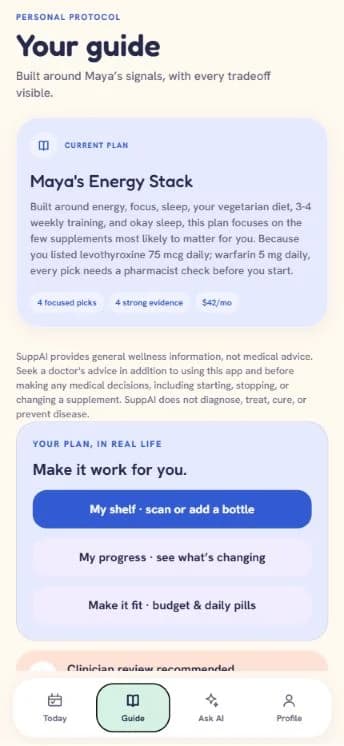
See your free picks, then run the medication clash check against what you take.
Subscription required for full access ($5.99/month, $49.99/year, or $199 lifetime in the U.S. App Store listing; confirm in app). Supplement purchases are separate. We do not sell pills.
"Can I take calcium with my thyroid pill?"
Not at the same time. The NIH calcium fact sheet says levothyroxine is not absorbed well when taken within 4 hours of a calcium carbonate supplement. Calcium also hides in multivitamins, bone-health combos, and chewable antacids such as Tums, so check every label, not just the bottle that says calcium.
"Can I take iron with levothyroxine?"
Same idea. The NIH iron fact sheet says taking iron with levothyroxine can make the medicine less effective. MedlinePlus advises taking ferrous sulfate at least 4 hours before or after levothyroxine. Prenatal vitamins and many multis contain iron, so they count too.
"Can I take magnesium with my thyroid pill?"
The NIH magnesium fact sheet does not list levothyroxine as an interaction, so we will not claim one. MedlinePlus does tell levothyroxine users to mention antacids to their doctor and pharmacist, and many antacids contain magnesium. If your magnesium is part of an antacid, a multi with calcium or iron, or a mineral blend, ask your pharmacist whether to space it.
"Does biotin mess with thyroid tests?"
It can. NIH says very high biotin intakes can interfere with lab tests that measure hormones such as thyroid hormone, producing falsely normal or abnormal results. Biotin is common in hair, skin, and nail products. Tell whoever orders your blood work that you take it, and ask whether to pause it before the test.
Timing: empty stomach, food, and spacing
MedlinePlus says levothyroxine is usually taken once a day on an empty stomach, 30 minutes to 1 hour before breakfast, and that foods containing soybeans, walnuts, and dietary fiber may affect how it works. Talk to your doctor about grapefruit. Fiber powders and soy protein shakes are worth raising with your pharmacist. Coffee is not covered by the NIH pages cited here, so ask your pharmacist about your morning cup rather than relying on a blog. Follow the directions on your prescription label first.
Check your whole stack in Wellpicked
Wellpicked builds a free list of supplement picks from your goals and what you already take. Add levothyroxine as a medication, and the medication clash check flags picks to space out or raise with your pharmacist. It can still miss things, so bring the list to your pharmacist.
Questions before you download
How many hours apart should I take calcium or iron and levothyroxine?
MedlinePlus advises at least 4 hours before or after levothyroxine for calcium carbonate and ferrous sulfate. Your pharmacist can confirm what fits your exact products and schedule.
Is a multivitamin okay with levothyroxine?
Many multis contain calcium, iron, or both, so the same spacing questions apply. Bring the label to your pharmacist.
Should I stop biotin before a thyroid blood test?
Ask the person ordering the test. NIH notes high biotin intakes can skew some thyroid hormone test results, so tell them you take it.
Sources and editorial approach
Written by Wellpicked. App descriptions are based on the linked official pages and our implemented features. We do not present unverified review complaints as competitor facts. Health references provide background, not clinical review of this article or proof of a personalized result.
See your free picks, then run the medication clash check against what you take.
Subscription required for full access ($5.99/month, $49.99/year, or $199 lifetime in the U.S. App Store listing; confirm in app). Supplement purchases are separate. We do not sell pills.